

Solid Security
Solid Security Dashboard
Coming soon: Solid Security is becoming Kadence Security. You may see both names used while we update the product, documentation, and customer experience.
The Kadence Security Dashboard utilizes Security Cards to organize all your security activity in a more digestible way. Security Cards let you see only the data you want first, and even offer direct ways to administer security fixes for your WordPress website without leaving the dashboard.
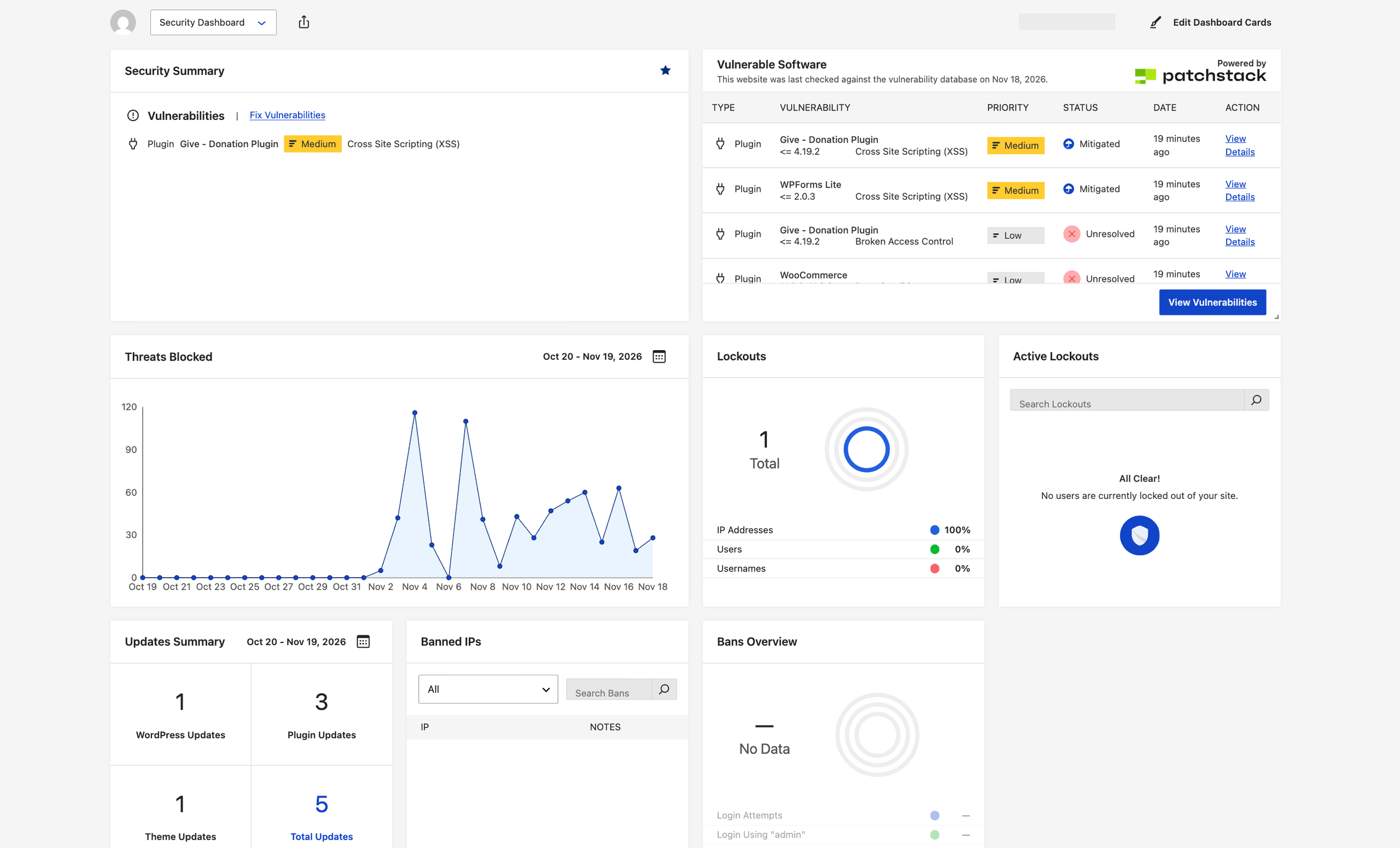
By default, both Kadence Security Basic and Kadence Security Pro create a dashboard pre-populated with cards to give you an idea of how you might manage your site’s security settings and functionality. You’re free to use it as is, or edit and configure the dashboard by selecting just the cards you find most valuable.
By getting started with Kadence Security, you’re already protected. The dashboard, as well as individual cards, allows you to see in real time how your site security is performing and adjust the default settings to tighten or loosen them based on your site’s needs.
Open the dashboard from Security → Dashboard in WordPress Admin to see your Security Dashboard.
Manage Access to your Security Dashboards
Access to security information and the ability to modify security settings for your site is not every user’s job. That fact is baked into Kadence Security’s default settings. During onboarding, you can select the users or user groups you want to have access to security settings and create additional dashboards.
Whenever you need to modify those settings, navigate to Security → Settings → User Groups.
The Manage Kadence Security setting controls whether a user group can see the dashboard (and any other Kadence Security settings) at all.
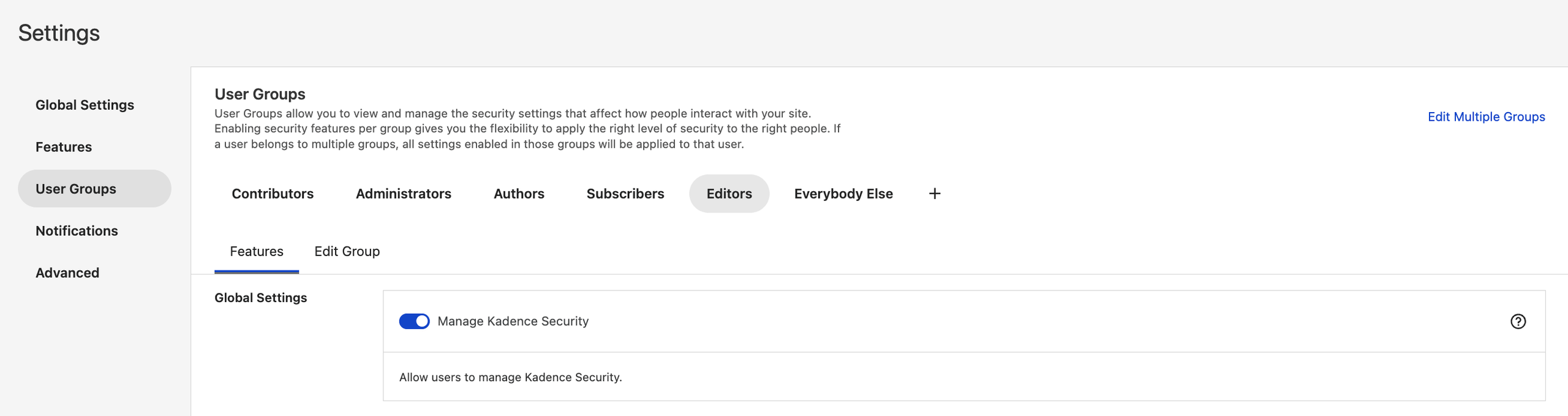
Once you’ve enabled the Security Dashboard access for your preferred user groups, you can view it in your WordPress Admin menu.
See Kadence Security User Groups and Advanced Settings.
Create multiple dashboards
Kadence Security Pro users can also create multiple dashboards and share read-only access to them with specific users or user roles.
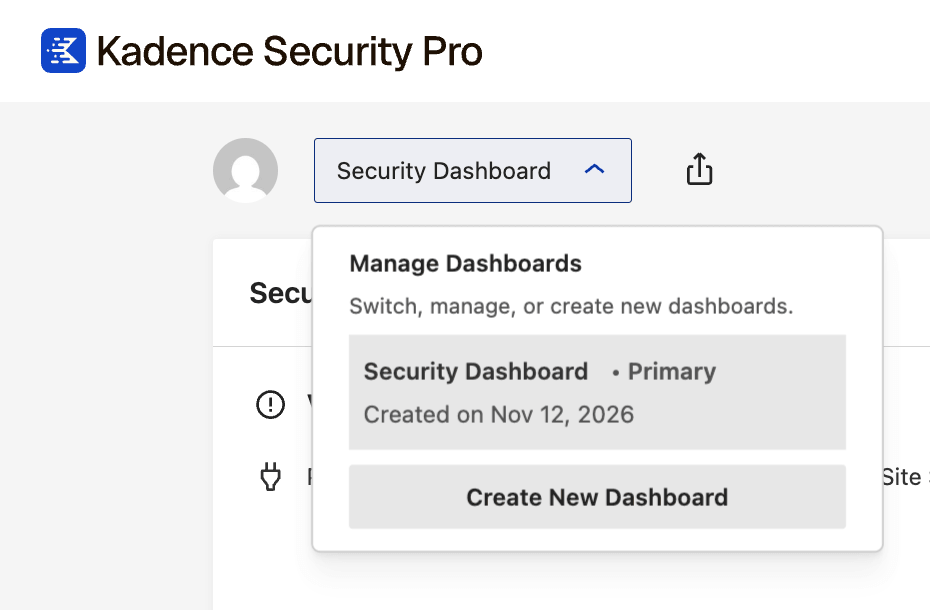
You can arrange the look of your Dashboard by dragging the dashboard cards and dropping them to the desired location.
Dashboard Cards
Several cards are available to you as you construct your dashboards. Kadence Security Basic users have access to the following cards:
- Active Lockouts
- Banned IPs
- Bans Overview
- Database Backups
- Lockouts
- Security Summary
- Threats Blocked
- Vulnerable Software
Pro Cards
In addition to those cards, Kadence Security Pro users have these cards available:
- Trusted Devices
- Updates Summary
- User Security Profile(s)
The following sections outline what you can do with individual dashboard cards.
Security Summary
The Security Summary card shows an overview of the most recent Kadence Security news pulled from the product news feed. This allows you to quickly navigate to a deep dive into WordPress vulnerabilities, curated with immense help from the folks at Patchstack.
Patchstack’s team is continuously monitoring and patching vulnerabilities in the hundreds of thousands of products built around the WordPress ecosystem, and you’ll see their Patchstack Priority score next to each identified vulnerability, helping you understand the real-world risk it presents to your site. You can deep-dive directly from this card into that detailed report.
In addition to the news feed, the Security Summary card surfaces the specific vulnerabilities known to exist on your site, with a link to fix them.
See Vulnerability Protection with Kadence Security.
Updates Summary
The Updates Summary card provides a summary of all updates made on the site’s WordPress core, plugins, and themes within a specific timeframe. This card is essential for tracking update activity. By reviewing this card, you can monitor whether updates are occurring regularly or if there are gaps in update activity, as it is important to ensure all WP components are running the latest versions to mitigate vulnerabilities.
Version Management settings live under Security → Settings → Features → Site Check. See Kadence Security Features Settings.
Vulnerable Software
The Vulnerable Software card displays the scan results from the most recent Site Scan against the Patchstack vulnerability database and includes the Patchstack Priority score next to each identified vulnerability, helping you understand the real-world risk it poses to your site. This ensures that the WordPress core, plugins, and themes are checked for known vulnerabilities and provides a quick overview of what the scanner found, including basic information about the vulnerabilities.
See All about Kadence Security Site Scans and Vulnerability Protection with Kadence Security.
Banned IPs
The Banned IPs card lets you manually ban specific IP addresses from accessing the site straight from the dashboard. You can also add, edit, and delete notes with each banned IP address.
This card is part of the Firewall module’s IP Management settings. See All about Firewall with Kadence Security.
Bans Overview
The Bans Overview provides a quick overview of Login Attempts, Login Attempts using “admin”, and CAPTCHA bans on the site over the past 30 days. You can use this card to monitor a summary of login-related events and identify suspicious activity, enabling proactive responses to security threats.
Active Lockouts
The Active Lockouts card displays a real-time list of IP addresses that have been temporarily locked out after meeting lockout criteria, such as multiple failed login attempts. This helps you monitor potential brute-force attacks early, enabling you to take further action, such as banning repeat offenders or investigating the source.
Active lockouts are temporary and last for 15 minutes before Kadence Security automatically releases them (default Local Brute Force timing; your Global/Features lockout settings may differ). You can use this card to release any active site lockouts.
See Releasing Site Lockouts in Kadence Security.
Lockouts
The Lockouts card provides an overview of lockout events on the site over the past 30 days. It displays the total number of recorded site lockouts and a breakdown of the source of the attempted logins. This card is useful for understanding where the site lockouts are occurring, which can help you implement additional security measures such as stricter login policies, if necessary.
Threats Blocked
The Threats Blocked card displays a graph of the overall number of threats Kadence Security has blocked on the site. The events displayed are data coming from these modules: Local Brute Force, Network Brute Force, and Firewall Rules Engine. This lets you quickly assess the effectiveness of your security configurations and identify which periods had increased activity.
User Security Profiles
The User Security Profiles card provides a comprehensive overview of user security details for all registered users on the site. You can use this card to enforce security measures such as logging out a specific user or forcing a password change for all users.
User Security Profile
The User Security Profile card works the same as the User Security Profiles card, but it lets you pin an individual user, displaying the same security information and adding the ability to send a Two-Factor Reminder email to that user (if the user hasn’t configured 2FA yet).
See Kadence Security Two-Factor Authentication (2FA) Settings Guide and All about User Security with Kadence Security.
Database Backups
The Database Backups card lets you create a database backup of the site and lists all the backups you’ve created. The number of backups listed will be based on the limit you’ve set on the BACKUPS TO RETAIN setting in Security → Settings → Features → Utilities → Database Backups.
Note: This card won’t be available when you have the Solid Backups – Legacy plugin activated on your website. For Security users who don’t have a backup solution, this is a rudimentary backup option that works as a failsafe for when some setting changes and you need to roll back to the database from before the change.
Trusted Devices
The Trusted Devices card displays a graph of device activity on your site, categorizing devices as Approved, Auto-Approved, or Blocked. This card lets you regularly monitor how devices interact with your site, helps detect unauthorized devices, and ensures that only trusted devices gain access.
Approved devices are those that are manually verified by an administrator. Auto-Approved devices are those recognized by Kadence Security as similar to an existing trusted device. Blocked devices are those denied access by the authorized user.
See Understanding Trusted Devices in Kadence Security.
How to share a read-only Security Dashboard with users
Kadence Security Pro lets you share a read-only view of the Dashboard with specific users. This is an excellent way to share security insights with clients or team members without granting them access to make changes.
For agencies managing client websites, this feature is particularly valuable, as it allows you to showcase the work you’re doing to keep their sites secure. This gives your clients an at-a-glance view of threats blocked, update summaries, lockouts, and more. Sharing the Dashboard lets your clients monitor their sites safely without needing direct access to admin settings or needing technical knowledge. You can choose to share either the default or custom Dashboard, ensuring that admin settings remain protected while they stay informed.
By giving your specific users a tailored view, you can demonstrate the security efforts you’ve put in place and build confidence by being transparent about those measures.
When you have finalized the look of your Dashboard, you can share it with other users in three steps.
1. Select the Share Dashboard button.
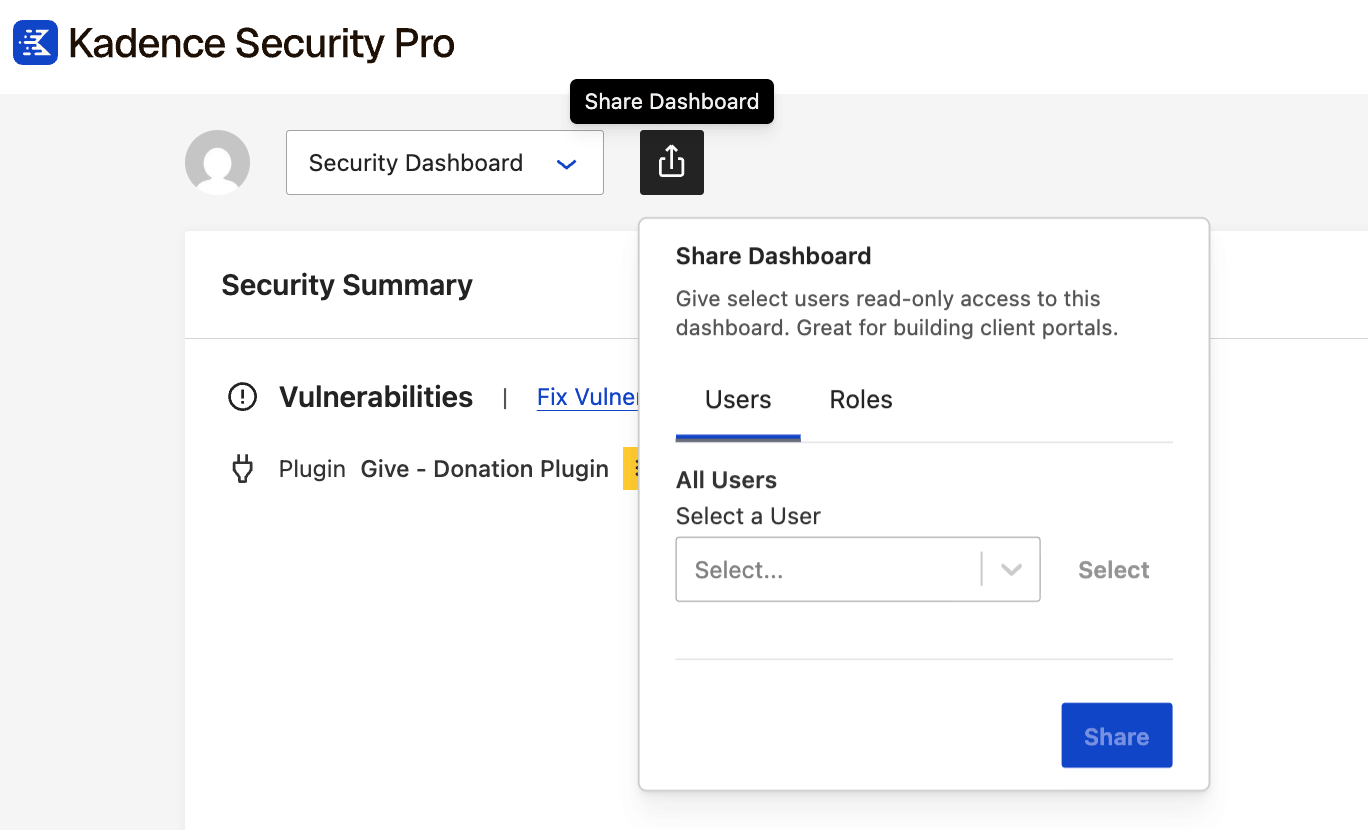
2. Choose the User or User Role.
3. And Share!
Upon their next login, the selected user or users will have access to that Security Dashboard.
Dynamic Highlights
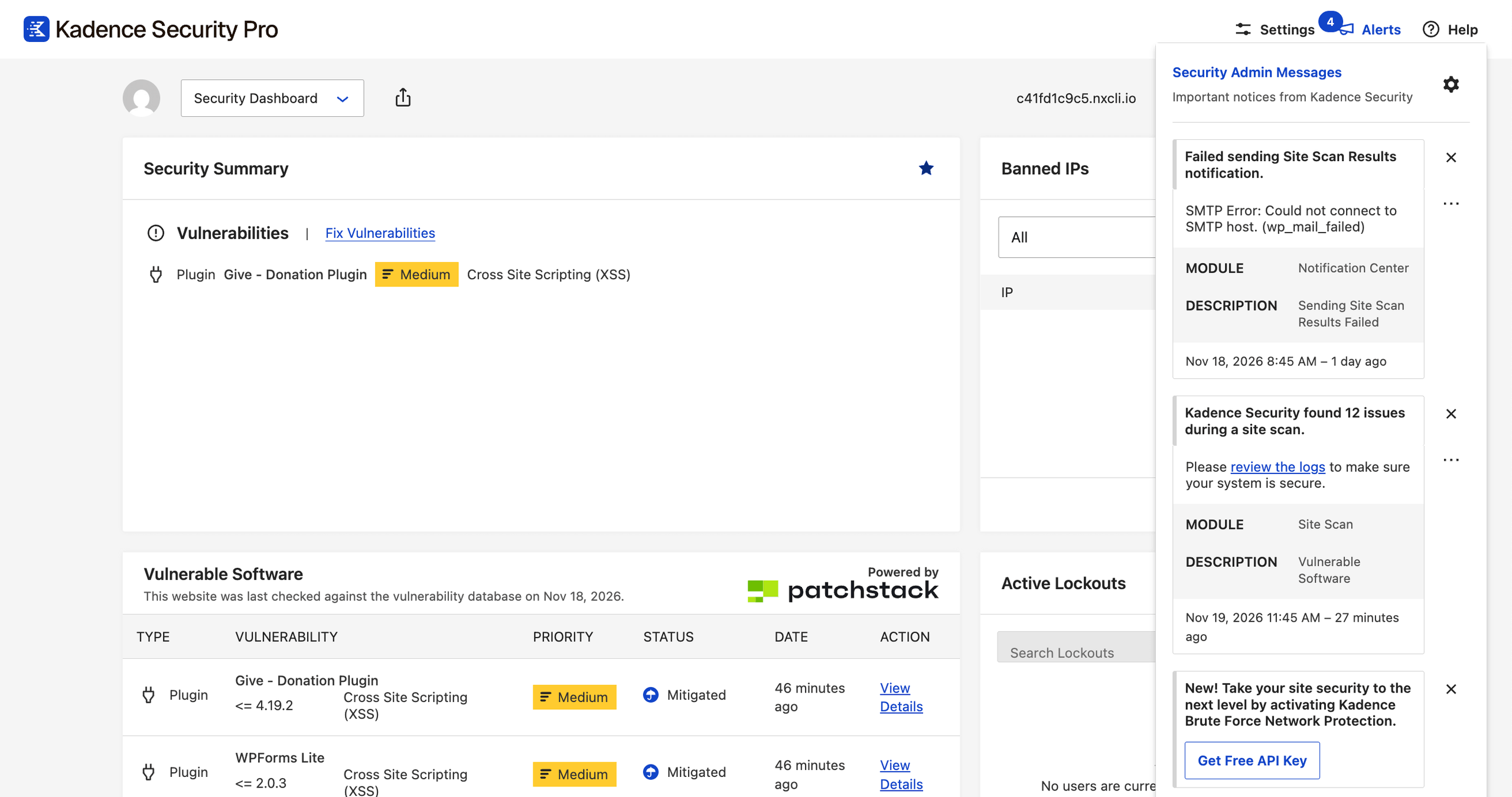
Dynamic Highlights is a Dashboard UI feature that visually highlights important security events in the Security Admin Messages center, ensuring you see urgent issues immediately.
Examples include: File Change and Vulnerable Software alerts, Failed notification sends, etc., which can be accessed by clicking Alerts:
How can Dynamic Highlights affect my Multisite environment?
Dynamic Highlights are enabled by default and run background database queries like the below to check for the most recent matching log entries:
SELECT id, parent_id, module, type, code, timestamp, ...
FROM wp_itsec_logs
WHERE module='notification_center' AND code LIKE 'send_failed::%' ...
On high-scale multisites, it can cause database spikes and impact performance even if logging is set to File Only.
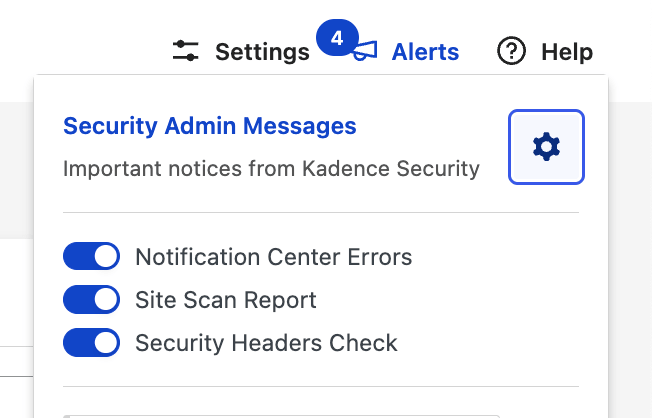
To disable this feature, you can tap the gear icon in the Security Admin Messages area, and toggle OFF the highlights you do not need:
If you are still seeing the database query of this feature spiking server resources despite disabling it, you can disable it robustly using a code snippet, as recommended here: How to stop the send_failed Notification Center database query from spiking server resources on a multisite environment?
WordPress Dashboard Widget
When using Kadence Security Pro, a WordPress Dashboard widget is automatically added. This provides at-a-glance data from the Security Dashboard directly within the WordPress admin area. This lets you quickly assess your website’s security status without navigating to the main Security Dashboard. You can also use the action buttons on each Security Card there to perform security actions.
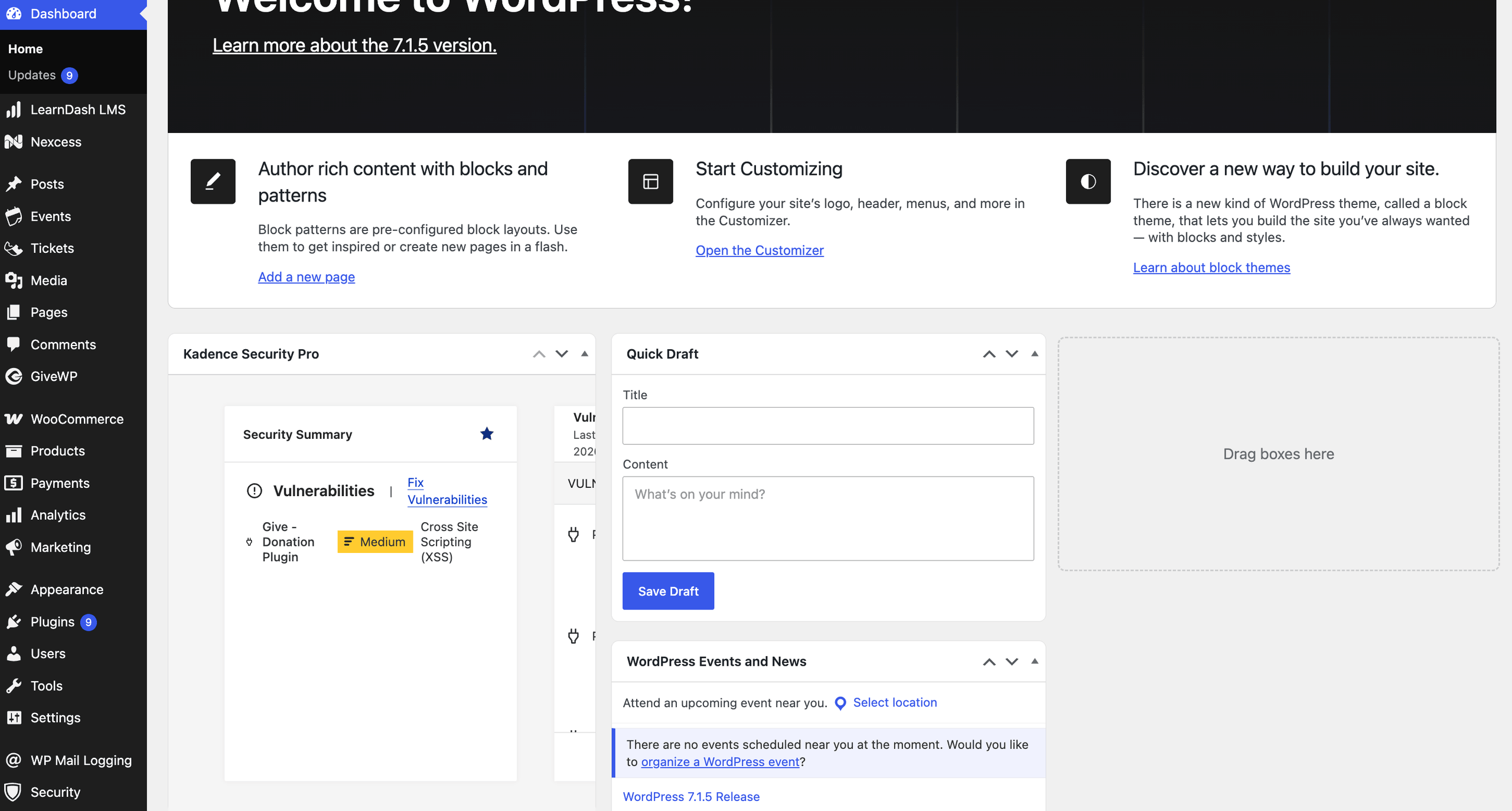
Overall, having a Security Dashboard is an essential way to understand the security health of your WordPress website, helping you stay informed and take proactive measures against potential threats. You can customize and share a single Dashboard, or create multiple tailored to your clients’ needs or purposes.
Whether you’re using the Basic version or using the advanced capabilities of the Pro version, Kadence Security Dashboards ensure you can effectively manage your site’s security and build trust while keeping the right people informed.